









Ürünlere Hızlı Geçiş
Teklif Alın
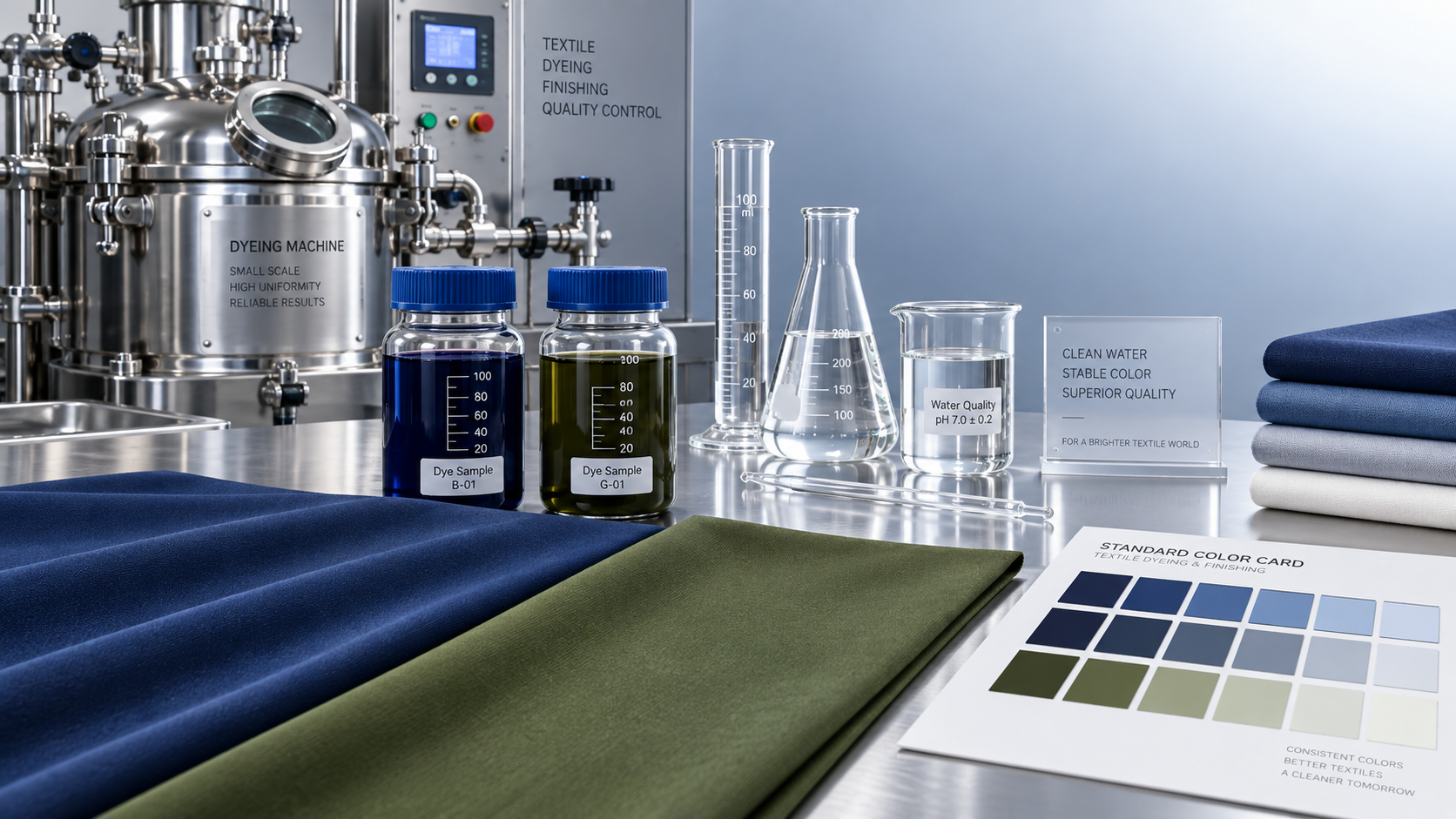
Shade variation is rarely caused by one mistake. A dye formula can be correct on paper and still produce a lighter, duller, redder, or less even result when the water, fabric preparation, dye lot, machine loading, or temperature profile changes. For anyone asking, “How can I prevent shade variation in textile dyes?”, the practical answer is to make every color-critical input and process condition repeatable before production begins.
The most effective approach is not simply buying a “better” dye. It is comparing the sources of variation and controlling the ones that have the greatest effect on the specific fibre, dye class, and dyeing method. A reactive dye process for cotton, for example, is sensitive to salt, alkali, water hardness, pH, and wash-off. Polyester dyed with disperse dyes responds strongly to temperature control, dispersion quality, and reduction clearing. The same visual defect may therefore require very different corrective actions.
Start by separating dye variation from process variation
When a bulk lot does not match the approved standard, production teams often assume that the dye itself is inconsistent. That can happen, but it is only one possible cause. A useful first comparison is between lot-to-lot dye variation and application variation.
This distinction matters because a dye supplier cannot solve a circulation problem, and a machine adjustment cannot correct a genuinely shifted dye lot. Before changing the formula, compare a controlled laboratory dyeing using the current dye lot with one using a retained or previously approved lot. Use the same substrate, water, auxiliaries, liquor ratio, and dyeing profile. That comparison helps identify whether the issue follows the dye or follows the production environment.
Compare dye supply options by consistency, not colour card appearance
A colour card shows the approximate hue range a dye can achieve. It does not prove that every delivered batch will give identical results in a particular mill process. When colour consistency matters, the more relevant questions concern batch management, documentation, packaging integrity, and the supplier’s ability to support repeat production.
A single dye batch purchased for one short production run can reduce immediate variation, but it is not always practical for repeat orders or export programmes. For continuing colour programmes, it is better to establish a controlled supply arrangement: retain a reference sample from each approved lot, record the lot number used for each production shade, and define a clear process for approving subsequent deliveries.
Some dye classes are particularly sensitive to small strength or hue differences because the final recipe combines several components. A black, navy, olive, or complex neutral shade may use multiple dyes with different exhaustion and fixation behaviours. A small shift in one component can become visible after dyeing or finishing. In these cases, evaluating each individual dye lot is more reliable than assuming that a stable-looking blended recipe will always compensate for variation.
For imported chemicals or export-oriented textile production, supply reliability also includes correct product identification, consistent labeling, proper storage conditions during transport, and complete handling information. Huafeng Chemical, based in Shandong Province, provides chemical export services and a broad product portfolio for overseas markets. In a colour-sensitive supply chain, the relevant value of such support is practical: traceable deliveries, responsive communication when lot information is needed, and fewer avoidable gaps between purchasing requirements and factory use.
The fabric preparation often decides whether a recipe can repeat
Two cotton fabrics with the same nominal composition can dye differently if their preparation is not equivalent. Residual sizing, waxes, oils, pectin, alkali, peroxide, optical brightener, or uneven mercerisation can alter wetting, dye uptake, and apparent brightness. This is why a recipe that worked on one greige fabric lot may fail on the next one without any error in dye weighing.
The same principle applies to blends. Polyester/cotton, nylon/spandex, viscose blends, and recycled-fibre fabrics can introduce additional uncertainty because each component may absorb dye differently or respond differently to heat and chemicals. The dye method must suit the actual fibre composition and finishing route, not just the fabric name used in purchasing documents.
Before approving a bulk recipe, compare laboratory samples on representative production fabric. A small cutting from an earlier lot is useful as a visual reference, but it cannot replace testing on the current fabric if the substrate has changed. The most dependable practice is to test absorbency and preparation quality at the point where the fabric enters dyeing, then hold questionable lots for correction or separate processing.
Do not judge preparation only by whiteness
A fabric may look white and still dye unevenly. Whiteness does not confirm uniform wettability or chemical cleanliness. Uneven residual substances can cause patchy dyeing, poor penetration, and variable fixation. For pale shades, the issue may appear as dullness or a yellow cast; for dark shades, it may appear as streaks, barre, or inconsistent depth.
Water is a chemical ingredient, not a background condition
Water changes the dye bath even when the recipe remains unchanged. Hardness minerals and trace metals can interfere with dye solubility, alter dispersion stability, consume auxiliaries, or create unwanted shade shifts. The impact depends on the dye type. Reactive dyes may show poor reproducibility when pH and electrolyte conditions vary, while disperse dyes can be affected by unstable dispersions or deposits in high-temperature systems.
It is not enough to check water quality once when a dyehouse is commissioned. Seasonal source changes, treatment-system performance, recycled process water, and inconsistent dosing can all create variation. The aim is not necessarily to use the most aggressively treated water for every process; it is to ensure that the water condition assumed by the recipe is the water condition actually used in production.
When a shade starts drifting without an obvious dye or fabric change, compare current water results with the conditions used during lab approval. Check hardness, pH, and the presence of metals relevant to the process. Also review whether sequestrants, buffers, dispersants, or other auxiliaries are being added at the intended level. An auxiliary substitution can affect shade just as much as a dye substitution.
Control the variables that matter for each dye class
Trying to standardise every parameter with the same level of precision can create unnecessary work. A better approach is to identify the few variables that most strongly influence the dye system in use.
- Reactive dyes on cellulosic fibres: Maintain consistent salt and alkali addition, pH, temperature, dyeing time, and wash-off. If alkali is added too quickly or unevenly, fixation can vary across the load. Poor wash-off can leave unfixed dye on the fabric and alter the apparent shade after drying.
- Disperse dyes on polyester: Control dispersion preparation, heating rate, maximum temperature, hold time, machine circulation, and reduction clearing where used. Rapid or uneven heating can lead to uneven uptake, especially in deep shades.
- Acid dyes on wool or nylon: Pay close attention to pH progression, temperature rise, levelling control, and substrate condition. Differences in fibre history, moisture content, or yarn tension may show as streakiness or package variation.
- Sulfur, vat, and pigment systems: Control reduction or oxidation conditions, chemical freshness, liquor movement, and post-treatment. These systems can appear acceptable immediately after dyeing but reveal instability after rinsing, drying, or subsequent processing.
Temperature deserves special attention because operators sometimes focus only on the final setpoint. The heating curve is also important. A fabric that reaches the same final temperature through a different rate or circulation pattern may not produce the same shade. Automated records are valuable because they show whether the actual process followed the approved recipe rather than merely whether the operator selected the right program.
Lab dips, bulk production, and repeat orders need different controls
A lab dip is a colour-development tool, not a guarantee of bulk reproducibility. Laboratory machines often have more uniform agitation, cleaner baths, and better heat transfer than production equipment. The risk increases when moving from a small sample to a full machine load, especially for dark shades, sensitive blends, or low-liquor-ratio processes.
Use the lab dip to establish the target shade and recipe direction. Then conduct a bulk trial under normal production conditions before committing a large order. During that trial, assess not only the centre cut of the fabric but also multiple positions across the batch. For yarn packages, compare inside-to-outside and package-to-package results. For garments, inspect areas where seams, folds, or variable fabric density can affect dye penetration.
Repeat orders require another layer of control. Keep a physical or digital record of the approved standard, substrate details, dye and auxiliary lot numbers, recipe, machine, loading level, water condition, and finishing route. This may sound administrative, but it prevents a common failure: trying to match an old shade using incomplete records and then compensating blindly with extra dye.
Measure shade under the conditions in which it will be sold
Visual approval remains important, but it should be disciplined. A shade can look correct in one light source and noticeably different in another. This is especially relevant for colours built from multiple dyes, because dyes may reflect light differently even when they appear matched under a single lamp. This effect is commonly described as metamerism.
Compare samples under agreed lighting conditions and after the complete finishing process. Do not approve a wet fabric and assume it will match after drying. Softener, resin, coating, calendaring, heat setting, brushing, or optical finishing may change depth, gloss, hue perception, or surface reflectance.
Instrumental colour measurement can strengthen the approval process, particularly when several locations or production sites must work to one standard. It does not eliminate the need for visual judgement. Instead, it helps distinguish a visible process shift from a borderline difference that may be acceptable under the agreed standard. The comparison should always use the same measurement method, specimen preparation, and viewing conditions.
Common responses that create more variation
Adding more dye to a pale batch is not automatically the right correction. If the real cause is poor fixation, uneven circulation, a changed substrate, or incomplete wetting, increasing dye concentration can make the batch darker in some areas while leaving the underlying unevenness unresolved.
Another weak practice is changing several variables at once. Replacing the dye lot, changing an auxiliary, adjusting pH, and altering the heating cycle in one trial makes the result difficult to interpret. Corrective trials should isolate the likely cause where possible. A controlled comparison may take more discipline at the start, but it avoids repeated reprocessing and inconsistent records.
It is also risky to accept a substitute dye solely because its colour card looks similar. Similar hue does not mean equal strength, exhaustion, compatibility, fastness behaviour, or response to the existing recipe. Any substitute should be evaluated through a fresh lab-to-bulk process.
A practical release check before bulk dyeing
Before starting a colour-critical production order, confirm five points: the current dye lot is approved or corrected against the production standard; the fabric lot has passed the required preparation checks; water and auxiliaries match the recipe assumptions; the machine program and loading are appropriate for the batch; and the shade will be assessed after the intended finishing route.
When a discrepancy appears, preserve samples and records rather than relying on memory. Keep the original standard, lab dip, bulk sample, dye and fabric identifiers, and process data together. That evidence makes it much easier to decide whether the next action is dye correction, fabric investigation, water treatment adjustment, or machine maintenance.
Consistent textile colour comes from a controlled system, not from a single product choice. The dye matters, but so do the substrate, water, auxiliaries, machine conditions, and finishing sequence. Once those factors are tracked as one connected process, shade variation becomes easier to prevent, diagnose, and correct before it reaches the finished market.
Bugün Bize Talebinizi Gönderin